Why Does My Hyundai Burn Oil? Causes and Solutions Explained

Many Hyundai owners are surprised to find their car burning oil. Maybe you’ve noticed the oil level drops between oil changes. Or perhaps you see blue smoke from your exhaust. If you’re worried, you’re not alone—this is a common concern for drivers.
But why does your Hyundai burn oil? And what should you do about it? Let’s break down the causes, signs, and solutions in clear, simple language so you can keep your car running smoothly.
What Does “burning Oil” Mean?
When a car is burning oil, it means the engine oil is entering the combustion chamber and being burned along with fuel. Normally, oil lubricates moving parts inside the engine. But if something is wrong, oil can leak into places it shouldn’t be—like the area where air and fuel mix and burn. This not only lowers your oil level, but it can also cause engine problems if left unchecked.
Common Signs Your Hyundai Is Burning Oil
It’s not always easy to tell if your car is burning oil, especially if you’re new to car maintenance. Here are some clear signs:
1. Oil Level Drops Quickly
If you check your dipstick and see the oil level going down faster than expected, your car may be burning oil.
2. Blue Smoke From Exhaust
Blue or bluish-gray smoke means oil is burning inside the engine. It’s most noticeable when you start the car or accelerate.
3. Burning Oil Smell
Sometimes, you’ll notice a sharp, chemical smell—especially after driving.
4. Check Engine Light
Some newer Hyundais will turn on the check engine light if the car detects problems linked to oil burning.
5. Oily Spark Plugs
If a mechanic finds oil on the spark plugs, it’s a clear sign oil is getting into the combustion chamber.
Why Do Hyundais Burn Oil?
Many things can cause oil burning. Some are simple wear-and-tear, while others are design-related or due to poor maintenance. Let’s dive into the main reasons:
1. Worn Piston Rings
Piston rings seal the space between the piston and cylinder wall. Over time, they can wear out, letting oil sneak into the combustion chamber. Older Hyundais, or cars with high mileage, often have this problem.
Non-obvious insight: Even moderate wear can cause noticeable oil loss, but the car may still run smoothly at first.
2. Valve Seal Problems
Valve seals keep oil from leaking into the engine’s cylinders. If these get brittle or cracked, oil can drip inside and burn with the fuel. This is common after 100,000 miles or more.
Practical tip: If you mostly see blue smoke when starting the car, faulty valve seals are a likely cause.
3. Pcv Valve Failure
The PCV (Positive Crankcase Ventilation) valve controls gases and pressure inside the engine. If it gets clogged, pressure builds up and forces oil into the combustion chamber.
Beginner mistake: Many people overlook the PCV valve during regular maintenance. It’s often cheap and easy to replace.
4. Engine Design Issues
Some Hyundai engines—especially the 2. 4L GDI and 2. 0L Turbo found in certain models—have had issues with oil consumption. In some cases, the engine burns oil even with low mileage. Hyundai has issued service bulletins and recalls for these problems.
Example: The 2011–2015 Sonata and Santa Fe models were especially affected.
5. Thin Or Wrong Oil Type
Using oil that’s too thin (like 0W-20 instead of 5W-30) can increase oil burning, especially in older engines. Always use the oil grade recommended in your Hyundai’s manual.
Non-obvious insight: Switching to a slightly thicker oil (if allowed by your manual) can sometimes reduce oil burning in high-mileage engines.
6. High Engine Temperatures
If your engine runs hotter than normal, oil can break down faster and burn more easily. Overheating can also damage piston rings and seals, leading to more oil loss.
7. Poor Maintenance Habits
Skipping oil changes or using low-quality oil can create sludge and wear out engine parts faster. This raises the chance of oil burning.
Practical tip: Always change oil and filter on time, and use high-quality oil.
8. Turbocharger Leaks
Some Hyundai models have turbocharged engines. If the turbo’s seals wear out, oil can leak into the intake system and get burned.
Example: The Hyundai Sonata 2.0T can develop turbo oil leaks after 60,000 miles if not properly maintained.
How To Check If Your Hyundai Is Burning Oil
You don’t need to be a mechanic to spot oil burning. Here are simple steps:
1. Check Your Oil Regularly
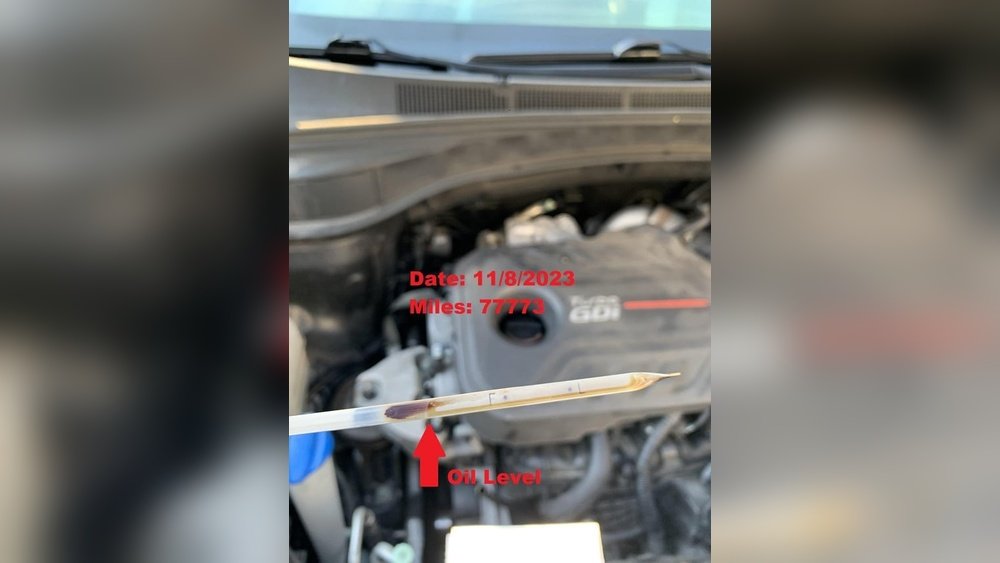
Pull out the dipstick, wipe it clean, put it back, and check the level. Do this every two weeks if you suspect a problem.
2. Look At The Exhaust
Start your car and watch for blue smoke, especially on a cold start or when pressing the gas pedal hard.
3. Monitor Oil Consumption
Write down your oil level and mileage. If you’re adding more than 1 quart every 1,000 miles, it’s time to investigate.
4. Notice Smells Or Warning Lights
Pay attention to burning smells or dashboard warnings.
Table: Common Causes Of Oil Burning By Model And Year
Some Hyundai models are more likely to burn oil due to design issues or recalls. Here’s a quick comparison.
| Model | Years Affected | Common Cause |
|---|---|---|
| Sonata 2.4L GDI | 2011-2015 | Piston ring wear |
| Santa Fe 2.4L | 2013-2015 | Piston ring/valve seal issues |
| Elantra | 2010-2015 | Valve seal wear |
| Tucson 2.0L Turbo | 2016-2018 | Turbo seal leaks |
How Much Oil Burning Is Normal?
All engines burn a little oil as they age. Hyundai says using up to 1 quart every 1,000 miles can be considered normal—especially for older or high-mileage cars. However, most engines burn much less. If you’re adding oil more often than this, or see other warning signs, you should take action.
Table: Acceptable Vs. Excessive Oil Consumption
To make it easy, here’s a quick look at what’s normal and what’s not.
| Mileage | Acceptable Use | Excessive Use |
|---|---|---|
| Under 60,000 miles | <1 qt / 3,000 miles | >1 qt / 1,000 miles |
| 60,000–120,000 miles | <1 qt / 2,000 miles | >1 qt / 1,000 miles |
| Over 120,000 miles | <1 qt / 1,000 miles | >1 qt / 800 miles |
What Should You Do If Your Hyundai Burns Oil?
If you notice oil burning, don’t ignore it. Here’s how to respond:
1. Check Your Oil More Often
Top off the oil as needed to avoid running low. Low oil can destroy your engine.
2. Switch Oil Type If Needed
Ask a trusted mechanic about using a thicker oil if your car is older and the manual allows it.
3. Replace Pcv Valve
This is a low-cost fix that sometimes reduces oil burning.
4. Get A Professional Diagnosis
Have a mechanic check for leaks, worn rings, or valve seal problems. They can do a compression test or use a borescope to look inside the engine.
5. Fix The Root Problem
If your car is under warranty, Hyundai may repair known issues for free. For older cars, repairing worn rings or seals can be expensive, but sometimes, regular maintenance and minor fixes can slow oil burning.
Non-obvious insight: Sometimes, using a “high mileage” oil can help condition old seals and reduce leaks.

Credit: www.youtube.com
Can Oil Burning Damage Your Engine?
Yes, especially if you ignore it. Running low on oil can:
- Overheat the engine
- Cause parts to wear out much faster
- Lead to engine knocking or complete failure
Practical advice: Even if your car runs fine now, ignoring oil burning can cost you thousands later.
Table: Costs Of Repairs For Oil Burning Problems
Here’s what you might expect to pay in the US for common repairs:
| Repair | Estimated Cost | Time Needed |
|---|---|---|
| PCV Valve Replacement | $50–$150 | 30–60 minutes |
| Valve Seal Replacement | $600–$1,200 | 1–2 days |
| Piston Ring Replacement | $1,500–$3,500 | 2–5 days |
| Turbo Seal Repair | $800–$1,500 | 1–2 days |
Preventing Oil Burning In Your Hyundai
Prevention is often easier and cheaper than repair. Here’s what you can do:
- Follow the oil change schedule in your owner’s manual.
- Use the correct oil type for your engine and climate.
- Let your engine warm up before hard driving, especially in cold weather.
- Check for recalls or service bulletins for your Hyundai model.
- Ask your mechanic to inspect piston rings, valve seals, and the PCV valve during regular service.
Extra tip: Use top-quality oil and filters. Cheap oil often breaks down faster and can cause more deposits.
When Should You Worry?
If you’re adding oil more than once between changes, or see blue smoke and a drop in performance, don’t wait. The problem may get worse quickly. Address the issue early to save money and extend your car’s life.

Credit: www.youtube.com
Where To Find More Help
If you need technical details about your specific Hyundai model, the Hyundai official website has owner’s manuals and maintenance guides. Or, you can check this resource: Hyundai Wikipedia Page.
Frequently Asked Questions
Why Does My Hyundai Burn Oil Even Though I Maintain It Well?
Even with good maintenance, some Hyundais have design issues that cause oil burning. Parts like piston rings and valve seals can wear out over time, especially in certain models from 2011–2015.
Can I Keep Driving If My Hyundai Burns Oil?
You can drive, but always keep the oil topped up. Running low can destroy your engine. Fixing the root problem is the safest choice.
Will Thicker Oil Stop My Hyundai From Burning Oil?
Sometimes, using a thicker oil can slow oil burning, especially in older engines. But always check your owner’s manual or ask a mechanic before changing oil types.
Is Oil Burning Covered Under Hyundai’s Warranty?
If your car is still under powertrain warranty and affected by a known issue, Hyundai may cover repairs. Check with your dealer about recalls or service bulletins.
How Often Should I Check The Oil If My Hyundai Burns Oil?
Check your oil level every 500–1,000 miles if you suspect oil burning. Top up as needed, and keep track of how much oil you’re adding.
Taking care of your Hyundai when it burns oil is about being alert, acting quickly, and not ignoring warning signs. Understanding the causes and solutions helps you drive with more confidence and protect your engine for many more miles.

Credit: www.reddit.com