How Much Coolant Does a Hyundai Sonata Take? Complete Guide

If you own a Hyundai Sonata or plan to maintain one, knowing the right amount of coolant for your car is important. Coolant, also called antifreeze, helps keep the engine at the right temperature. Too little coolant can cause the engine to overheat. Too much can cause leaks or other problems. But how much coolant does a Hyundai Sonata actually take? The answer depends on your car’s year, engine type, and sometimes the climate where you drive. Let’s break it down in a way that’s easy to understand.
What Is Coolant And Why Does It Matter?
Before talking about numbers, it’s good to know what coolant does. Coolant is a liquid that flows through your engine. It absorbs heat and moves it away from the engine block. Then, it releases that heat in the radiator. This keeps your engine from getting too hot or too cold. Without coolant, engines can get damaged fast.
Two things often confuse beginners. First, coolant and antifreeze are basically the same thing. The difference is small: coolant is usually a mix of antifreeze and water. Second, coolant does not last forever. Over time, it breaks down or gets dirty, so you must change it.
How Much Coolant Does A Hyundai Sonata Need?
The amount of coolant your Hyundai Sonata needs depends on the model year and engine size. Most Sonata models use between 6.0 and 7.2 quarts (about 5.7 to 6.8 liters) of coolant. But there are differences, so it is important to check the right number for your car.
Typical Coolant Capacities By Model Year
Here’s a quick look at the average coolant capacities for different Sonata generations:
| Model Year | Engine Type | Coolant Capacity (quarts) | Coolant Capacity (liters) |
|---|---|---|---|
| 2006-2010 | 2.4L I4 / 3.3L V6 | 6.3-7.2 | 6.0-6.8 |
| 2011-2014 | 2.4L I4 / 2.0L Turbo | 6.3-6.9 | 6.0-6.5 |
| 2015-2019 | 2.4L I4 / 2.0L Turbo / 1.6L Turbo | 6.3-6.9 | 6.0-6.5 |
| 2020-2024 | 2.5L I4 / 1.6L Turbo / Hybrid | 6.3-6.9 | 6.0-6.5 |
These numbers are for a full coolant change, including draining the radiator and the engine block. If you are just topping off the coolant, you will need much less.
How To Find Your Sonata’s Exact Coolant Capacity
The best way to find the exact number for your car is to check the owner’s manual. You can also look for a sticker inside the engine bay or ask a Hyundai dealership. If you don’t have these, you can usually use the numbers above as a safe guide.
Coolant Types: Which One Is Right For Your Sonata?
Not all coolants are the same. Hyundai cars need a specific type of coolant, usually called Phosphate Organic Acid Technology (POAT). Using the wrong type can damage the cooling system.
Common Coolant Types For Sonata
| Coolant Type | Color | Recommended For |
|---|---|---|
| POAT (Phosphate Organic Acid Technology) | Blue or Pink | Most Hyundai models (2011+) |
| HOAT (Hybrid Organic Acid Technology) | Yellow or Orange | Some older models |
| IAT (Inorganic Acid Technology) | Green | Older vehicles (not for Sonata after 2005) |
Always use the type your manual recommends. Mixing coolant types can cause sludge or damage.
How To Check Your Coolant Level
Checking the coolant level is easy, but beginners sometimes make mistakes. Here’s a simple way:
- Make sure the engine is cold before opening the coolant reservoir. Hot coolant can spray and burn you.
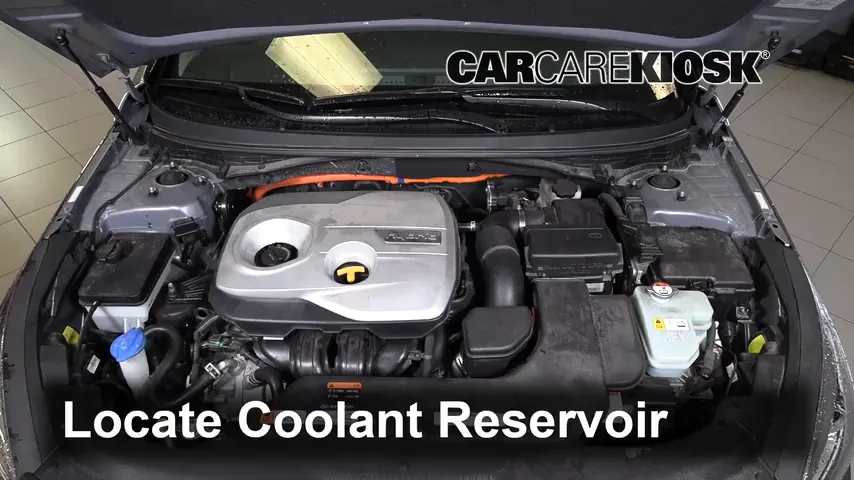
- Find the coolant reservoir. It is a plastic tank, usually near the radiator, with “MIN” and “MAX” marks.
- The level should be between these marks. If it’s below “MIN,” you need to add coolant.
- If the coolant is dirty or rusty, it’s time for a flush, not just a top-up.
Some people open the radiator cap, but this is risky if the engine is hot. Stick with the reservoir for safety.
Credit: www.carcarekiosk.com
How To Add Coolant To A Hyundai Sonata
If you need to add coolant, here’s what to do:
- Wait for the engine to cool down.
- Open the hood and find the coolant reservoir.
- Use a funnel to pour in the right coolant (mixed with water, usually 50/50).
- Add until the level reaches the “MAX” mark.
- Close the cap tightly.
- Start the engine and let it run for a few minutes.
- Check the level again. Sometimes air escapes and the level drops. Add more if needed.
Mixing Coolant And Water
Coolant usually comes as a concentrate. For most climates, you should mix coolant 50% with water. In very cold places, you can use up to 70% coolant. Never use only water or only coolant—both can damage your engine.
How Often Should You Change The Coolant?
Most Hyundai Sonatas need a coolant change every 60,000 miles or every 5 years. But some models, especially hybrids or turbo engines, might need it sooner. Check your manual for the best interval.
If you notice rust, strange smells, or overheating, change the coolant sooner. Old coolant can cause expensive damage.
Signs You May Have A Coolant Problem
Sometimes, the coolant level drops because of a leak or other problem. Watch for these signs:
- Engine overheating light comes on
- Sweet smell inside or around the car
- Coolant puddles under your car
- Heater not working well in winter
- White smoke from the exhaust
If you see any of these, check your coolant right away.
How To Do A Full Coolant Flush
A full flush means removing all the old coolant and replacing it with new. This is more work than topping off, but it’s important every few years. Here are the steps:
- Park on a level surface and let the engine cool down.
- Place a drain pan under the radiator drain plug.
- Open the drain plug and let the old coolant flow out.
- Close the plug and fill with distilled water.
- Run the engine for 5-10 minutes, then drain again.
- Close the plug and fill with fresh coolant (mixed 50/50 with water).
- Run the engine with the heater on for a few minutes.
- Check the level and top up if needed.
Many shops offer this service. If you do it yourself, always dispose of old coolant safely. It is toxic for pets and the environment.
Common Mistakes Beginners Make
Changing or adding coolant sounds easy, but people make mistakes. Here are two common ones:
- Using the wrong coolant type. Always check your manual. Mixing types can ruin your radiator or heater core.
- Not bleeding the air. When you add new coolant, air can get trapped. This creates hot spots in the engine. After filling, run the engine and squeeze the radiator hose gently to help air escape.
Many also forget to check for leaks after changing coolant. A small leak can cause big problems over time.
Hyundai Sonata Coolant Capacity Vs. Other Cars
Wondering how the Sonata compares? Here’s a quick look at coolant capacities for similar mid-size sedans:
| Car Model | Engine | Coolant Capacity (quarts) |
|---|---|---|
| Hyundai Sonata | 2.4L / 2.5L I4 | 6.3-7.2 |
| Honda Accord | 1.5L / 2.0L Turbo | 5.7-6.9 |
| Toyota Camry | 2.5L I4 / 3.5L V6 | 6.4-8.5 |
| Nissan Altima | 2.5L I4 | 7.2 |
As you can see, the Sonata’s coolant capacity is very close to its main competitors.

Credit: www.reddit.com
Why Proper Coolant Amount Matters
Some beginners add “a little extra” coolant, thinking it’s better. In reality, overfilling can cause pressure to build up. This may lead to leaks or damage. On the other hand, underfilling leaves air pockets that can cause overheating.
The “right” coolant amount keeps the engine safe in all conditions—hot summers, cold winters, city traffic, or long drives.
How To Avoid Costly Coolant Mistakes
A few tips can save you money and trouble:
- Always use distilled water when mixing coolant. Tap water contains minerals that can corrode your engine.
- Check your coolant before long trips or before summer and winter.
- If you need to add coolant often, find and fix leaks right away.
- Don’t ignore warning lights or temperature spikes.
It’s also smart to keep a spare bottle of the right coolant in your trunk, especially if you drive in remote areas.
When To See A Mechanic
If you are unsure about the type, amount, or how to change coolant, it’s better to visit a professional. Some cooling system problems are hard to spot without experience. For example, a blown head gasket can cause coolant loss, but it’s not always easy to see.
Professional mechanics have the right tools to flush, fill, and test your car’s cooling system safely.
Non-obvious Insights For Beginners
- Coolant can look fine but still be bad. Even if the color looks good, old coolant can lose its protective chemicals. That’s why you should change it on schedule, not just when it looks dirty.
- Hyundai uses “long life” coolant, but it’s not “lifetime.” Some sellers claim you never need to change coolant, but this is risky. Always follow the factory schedule.
Where To Learn More
If you want to double-check your coolant type or capacity, the official Hyundai website or your owner’s manual are the most reliable sources. For a detailed explanation, the Wikipedia Antifreeze page has more technical background.
Frequently Asked Questions
How Much Coolant Does A 2015 Hyundai Sonata Take?
A 2015 Hyundai Sonata with a 2.4L engine usually takes about 6.6 quarts (6.2 liters) of coolant for a full change. Turbo engines are similar. Always confirm in your owner’s manual.
Can I Use Green Coolant In My Hyundai Sonata?
Most modern Hyundai Sonatas need blue or pink POAT coolant. Green coolant is for older vehicles and can damage newer Hyundai cooling systems. Never mix coolant types.
What Happens If I Overfill The Coolant?
Too much coolant can increase pressure in the system. This might cause leaks or even damage the radiator or hoses. Always fill to the “MAX” line, not above.
How Often Should I Check My Coolant Level?
Check your coolant at least once a month and before long trips. Also check if you notice temperature spikes, leaks, or warning lights.
Is It Safe To Drive With Low Coolant?
No, driving with low coolant is risky. The engine can overheat fast, causing expensive damage. Always top off or fix leaks before driving further.
Keeping your Hyundai Sonata’s coolant at the right level is a simple way to protect your engine and avoid big repair bills. With the right type, the correct amount, and regular checks, your Sonata will stay cool and reliable for years.

Credit: www.youtube.com