What Kind of Oil Does a 2013 Hyundai Sonata Take: Expert Guide

What Kind Of Oil Does A 2013 Hyundai Sonata Take
Choosing the right oil for your car is one of the most important parts of keeping your engine healthy. If you drive a 2013 Hyundai Sonata, you might wonder, “What kind of oil does my car need?” The answer is simple, but there are a few details that make a big difference. For beginners, reading about oil types can feel confusing. There are numbers, letters, brands, and even myths about what is “best.” Don’t worry—this article will guide you step by step so you can make a confident, informed decision, even if you are new to car maintenance.
You’ll find out what oil Hyundai recommends for your Sonata, why oil type matters, how to choose between conventional and synthetic, and practical advice for buying and changing oil. Along the way, you’ll see real examples, tables, and answers to common questions from other Sonata owners.
Let’s make oil changes simple and easy to understand.
Recommended Oil Type For 2013 Hyundai Sonata
The 2013 Hyundai Sonata comes with different engines, but Hyundai’s official recommendation is clear for most owners. According to the 2013 Sonata owner’s manual, the best oil to use is SAE 5W-20 or SAE 5W-30. Both are multi-viscosity oils, and you can use either, but Hyundai prefers 5W-20 for better fuel economy and cold weather protection.
Why 5w-20 Or 5w-30?
The numbers and letter “W” stand for oil “viscosity,” which means how thick or thin the oil is in different temperatures. For example:
- 5W: The “5” is how the oil flows in cold weather. The lower the number, the better your engine is protected during cold starts.
- 20 or 30: This is how the oil flows at normal engine temperature. Lower numbers flow faster, but higher numbers protect better in hot weather.
For most Sonata drivers, 5W-20 is best because it gives good protection and helps the engine run smoothly.
Engine Options And Oil Capacity
Your Sonata may have one of these engines:
- 2.4L 4-cylinder (most common)
- 2.0L Turbo 4-cylinder
Both engines can use 5W-20 or 5W-30. The oil capacity (with a new filter) is:
- 2.4L: 5.07 quarts (4.8 liters)
- 2.0L Turbo: 4.76 quarts (4.5 liters)
Check your owner’s manual or the sticker under your hood if you’re not sure which engine you have.
Conventional Vs. Synthetic Oil
You might see two main types of oil in stores: conventional and synthetic. For beginners, here’s a simple breakdown:
- Conventional oil is made from crude oil. It’s less expensive but doesn’t last as long.
- Synthetic oil is made in a lab for better performance. It lasts longer, protects better in extreme temperatures, and helps your engine stay clean.
Hyundai says you can use either type in your Sonata. However, many mechanics recommend full synthetic oil for modern engines because:
- It gives better protection, especially in hot or cold weather.
- It keeps your engine cleaner.
- It lets you drive longer between oil changes (up to 7,500 miles in normal conditions).
Cost Comparison
Here’s a quick comparison between conventional and synthetic oil for the Sonata:
| Oil Type | Price (per quart) | Change Interval | Protection Level |
|---|---|---|---|
| Conventional | $4–$6 | 3,000–5,000 miles | Good |
| Synthetic Blend | $5–$7 | 5,000–7,500 miles | Very Good |
| Full Synthetic | $7–$10 | 7,500–10,000 miles | Excellent |
Which One Should You Choose?
If your Sonata is still in good condition and you want the best engine life, pick full synthetic oil. It costs more, but you save money with fewer oil changes and better engine health. If you are on a budget, synthetic blends are a good middle ground.
Popular Brands And Choosing The Right Oil
You’ll see many oil brands in the store. The important thing is to look for oils that meet API (American Petroleum Institute) standards and say “For Gasoline Engines” or “For API SN/ILSAC GF-5.” Here are some trusted options for your Sonata:
- Mobil 1 5W-20 or 5W-30 Full Synthetic
- Castrol EDGE 5W-20 or 5W-30
- Valvoline Advanced 5W-20 or 5W-30
- Pennzoil Platinum 5W-20 or 5W-30
- Quaker State Ultimate Durability 5W-20 or 5W-30
All of these are full synthetic and will work well in your Sonata. You do not need to use Hyundai-branded oil, but if your car is under warranty, keep receipts and choose well-known brands.
How To Read Oil Labels
When you look at an oil bottle, check for these key things:
- The numbers 5W-20 or 5W-30
- The label “Full Synthetic” or “Synthetic Blend”
- The API seal (usually a round mark that says “API Service SN”)
How To Change The Oil In Your 2013 Hyundai Sonata
Even if you are a beginner, changing your oil at home is possible with the right tools and some patience. Here’s a simple step-by-step guide.
Tools And Supplies Needed
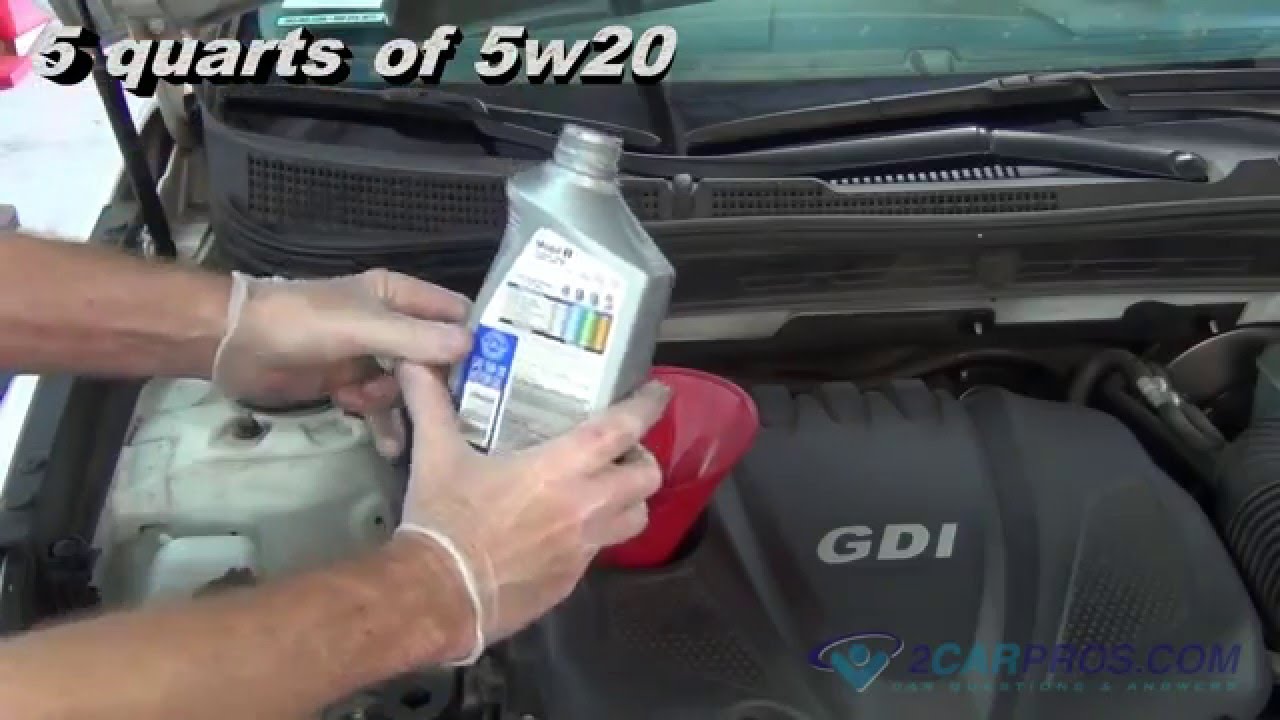
- 5 quarts of 5W-20 or 5W-30 oil (full synthetic recommended)
- New oil filter (check the part number for your engine)
- Wrench or oil filter tool
- Oil drain pan
- Funnel
- Gloves and rags
- Jack and jack stands (or ramps)
Step-by-step Instructions
- Warm up the engine: Run your car for 2–3 minutes so the oil flows out easily.
- Lift the car: Use the jack and jack stands or ramps for safety.
- Remove the drain plug: Place the drain pan under the engine, then unscrew the plug and let the old oil flow out.
- Replace the oil filter: Use the filter tool to remove the old filter. Rub some new oil on the gasket of the new filter, then screw it on by hand.
- Put the drain plug back: Tighten it carefully—don’t overtighten.
- Add new oil: Use the funnel to pour in the new oil. Check your manual for the exact amount.
- Run the engine: Start the car and let it run for 1–2 minutes. Check for leaks.
- Check the level: Wait a few minutes, then use the dipstick to check the oil. Add more if needed.
Common Mistakes To Avoid
- Using the wrong oil weight (always 5W-20 or 5W-30)
- Forgetting to replace the oil filter
- Overfilling or underfilling the oil
- Not tightening the drain plug
Credit: www.youtube.com
Oil Change Interval And Maintenance Tips
How often should you change the oil in your Sonata? Hyundai’s official recommendation is:
- Every 7,500 miles or 12 months (normal driving, synthetic oil)
- Every 3,000–5,000 miles (severe driving, conventional oil)
Severe driving means lots of stop-and-go, short trips, very hot or cold weather, or towing. Most people can follow the 7,500-mile schedule if they use synthetic oil.
Signs You Need An Oil Change
- The oil on the dipstick looks very dark or dirty
- The engine sounds louder than usual
- You see a warning light on the dashboard
- Oil level is low
Practical Tips
- Always check your oil every month, even if you don’t drive much.
- Keep a record of your oil changes (date, mileage, type of oil).
- Use a sticker or reminder app to remember your next oil change.
Using High Mileage Oil
If your 2013 Sonata has more than 75,000 miles, you can consider high-mileage oil. This type of oil has extra additives to help older engines:
- Reduces leaks
- Keeps seals soft
- Cleans more sludge
High-mileage oils are available as 5W-20 or 5W-30, so they fit Hyundai’s recommendation.

Credit: www.knfilters.com
Oil Filter Choices
The oil filter is just as important as the oil. For the 2013 Sonata, use a filter that fits your engine. Popular brands include:
- Fram Extra Guard
- Bosch Premium
- WIX XP
- Mobil 1 Extended Performance
Check your owner’s manual or ask at the auto parts store for the exact part number.
Oil Vs. Filter: How They Work Together
Oil lubricates the engine, while the filter catches dirt and metal bits. If the filter is dirty, your new oil will get dirty faster. Always change both at the same time.
How Weather Affects Oil Choice
One thing beginners miss is how weather changes oil needs. In very cold places, 5W-20 flows better and protects the engine during winter starts. In very hot climates, 5W-30 gives a little extra protection. If you live in a normal climate, either oil works well.
| Climate | Recommended Oil | Why |
|---|---|---|
| Cold (below 20°F) | 5W-20 Full Synthetic | Flows better at low temperatures |
| Hot (above 90°F) | 5W-30 Full Synthetic | Extra protection in heat |
| Normal (40–80°F) | 5W-20 or 5W-30 | Either is safe |
How To Buy The Right Oil
When shopping for oil, always:
- Check the label for 5W-20 or 5W-30 and “Full Synthetic”
- Buy from trusted stores or online shops
- Look for deals on multipacks (buying 5 quarts at once is often cheaper)
Most auto stores will recycle your old oil for free. Never pour used oil down the drain.
Non-obvious Insights For Beginners
- Synthetic oil is not just for “performance” cars. Many people think only sports cars need synthetic, but it helps all engines last longer, even basic models like the Sonata.
- Mixing brands is okay, but mixing weights is not. You can switch from one brand to another, but always stick to 5W-20 or 5W-30 for your Sonata.
- Don’t trust oil color alone. Fresh oil turns dark quickly, but that doesn’t always mean it’s bad. Use mileage and time as your main guide.

Credit: www.youtube.com
Where To Find More Information
For more details, check the official Hyundai Owner’s Manual or visit the manufacturer’s website. You can also find helpful guides at Edmunds.
Frequently Asked Questions
What Is The Difference Between 5w-20 And 5w-30 Oil?
5W-20 is thinner at normal temperatures, which means it flows easier and can help with fuel economy. 5W-30 is a little thicker, giving extra protection in very hot weather. Both are safe for your Sonata, but follow Hyundai’s advice for your climate.
How Often Should I Change The Oil In My 2013 Hyundai Sonata?
If you use full synthetic oil, you can go up to 7,500 miles or 12 months between changes. With conventional oil, change it every 3,000–5,000 miles. Always check your oil level once a month.
Can I Use High-mileage Oil In My Sonata?
Yes. If your Sonata has more than 75,000 miles, high-mileage oil can help prevent leaks and clean your engine. Just make sure it’s the right weight—5W-20 or 5W-30.
What Happens If I Use The Wrong Oil Type?
Using oil that is too thick or thin can cause poor engine performance, less protection, and even damage over time. Always use the oil weight listed in your owner’s manual.
Do I Need To Use Hyundai-branded Oil?
No. Any oil that meets API SN/ILSAC GF-5 standards and is the correct weight is fine. Choose a well-known brand and keep your receipts for warranty purposes.
Taking care of your 2013 Hyundai Sonata is simple once you know the basics of oil choice. With this guide, you can make smart decisions and keep your engine running smoothly for years to come.